





Buy Drywall Taping Compound: A Practical Guide for Contractors and Distributors
Release time: September 03 2026
Views: 111
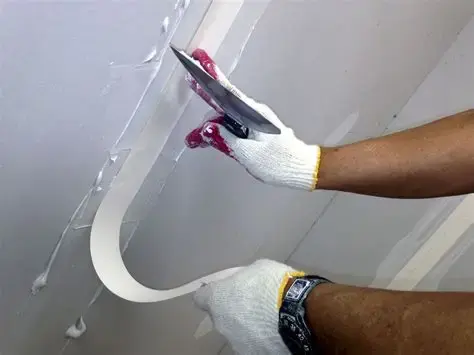
If you plan to buy drywall taping compound, choosing the right product is about much more than comparing prices. The compound must work with your drywall substrate, joint tape, application method, finishing system, and local construction requirements.
At LONZONE, we approach drywall finishing from a materials-engineering perspective. Our experience with jointing compounds, gypsum-based materials, dry-mix mortars, and wall systems allows us to evaluate drywall taping compound not as an isolated product, but as part of a complete finishing system.
Whether you are a contractor purchasing for a project, a distributor sourcing drywall materials, or a building-material brand looking for OEM production, the following factors can help you make a better purchasing decision.
What Is Drywall Taping Compound?
Drywall taping compound is used to embed joint tape and reinforce the joints between drywall or plasterboard panels. It can also be used for subsequent joint treatment and surface preparation before the final finishing coat.
A typical drywall joint treatment system includes:
Joint tape
Taping or base compound
Second coat
Topping or finishing compound
Sanding and final surface preparation
The first coat plays an important structural role. It must properly embed the tape, maintain good adhesion to the substrate, and provide a stable foundation for subsequent coats.
This is why we recommend looking at the complete drywall finishing system when you buy drywall taping compound, rather than evaluating the product only by its package price.

Drywall Taping Compound vs. Topping Compound
One of the most common mistakes we see when selecting drywall compounds is treating taping compound and topping compound as interchangeable products.
They serve different purposes.
Taping or Base Compound
The taping or base compound is primarily used for the first coat and, depending on the system, the second coat.
We focus on several key properties when developing this type of material:
Tape adhesion
Joint strength
Workability
Consistent setting or drying behavior
Substrate compatibility
Crack resistance
Application efficiency
The objective is to create a strong and stable joint before moving to the final finishing stage.
Topping Compound
Topping compound is generally used for the final coat. At this stage, surface smoothness, spreadability, sanding performance, and appearance become more important.
Our drywall finishing approach separates the functions of the base coat and topping layer so that each material can perform its intended role within the system.
If you are buying materials for a complete drywall finishing system, we recommend matching the taping compound and topping compound rather than selecting each product independently.
6 Factors to Consider Before You Buy Drywall Taping Compound
Application Method
Start by determining how the compound will be applied.
For smaller projects, manual application may be practical. For large residential, commercial, or institutional projects, application efficiency becomes much more important.
Before purchasing, consider whether the product is suitable for:
Manual application
Mechanical application
Large-area drywall finishing
Different joint widths
Different substrate conditions
The consistency of the compound should match the application method. A product that works well by hand may require different formulation characteristics for mechanical application.
Tape Adhesion
When we evaluate a drywall taping compound, tape adhesion is one of the first properties we consider.
Weak adhesion can result in:
Tape lifting
Joint cracking
Hollow areas
Visible joint lines
Rework
Delayed finishing
The compound needs to form a stable bond between the joint tape and drywall substrate while maintaining sufficient strength after drying or setting.
For this reason, we recommend testing the complete joint assembly rather than evaluating the compound only as a powder or paste.
Workability
A drywall compound may have an attractive purchase price but still increase your overall project cost if it is difficult to apply.
Good workability can improve:
Spreading efficiency
Joint filling
Tooling
Edge feathering
Application speed
Surface consistency
For high-volume projects, even a small improvement in application efficiency can have a significant impact on labor costs.
When we develop or customize a formulation, we consider the relationship between material properties and the actual installation process.
Drying or Setting Performance
Drywall projects depend heavily on construction schedules.
If the compound dries or sets too quickly, installers may have difficulty achieving a smooth joint. If it takes too long, the next finishing stage may be delayed.
The appropriate performance depends on:
Temperature
Relative humidity
Layer thickness
Substrate absorption
Ventilation
Application method
Always follow the manufacturer's technical data and conduct testing under actual project conditions.
Sanding and Surface Finish
A drywall joint is not finished simply because the compound has dried.
The final surface needs to be sufficiently smooth and uniform for painting, coating, wallpaper, or other decorative finishes.
A well-designed finishing system should provide:
Smooth surface transition
Easy feathering
Controlled sanding
Reduced surface defects
Consistent appearance
This is particularly important for projects where the finished wall will receive high-quality decorative coatings or where lighting can reveal surface imperfections.
Packaging, Storage, and Shelf Life
If you are purchasing drywall taping compound in bulk, packaging and storage conditions deserve attention.
For powder-based products, moisture protection is essential.
Before placing an order, check:
Packaging format
Bag or container strength
Moisture resistance
Shelf life
Storage requirements
Batch identification
Transportation conditions
For international purchasing, packaging should also be considered together with shipping efficiency and local handling requirements.
Should You Buy Powder or Ready-Mixed Drywall Taping Compound?
The right format depends on your project and supply chain.
Powder-Based Drywall Taping Compound
Powder products can be advantageous for:
International transportation
Large-volume purchasing
Longer-term storage under suitable conditions
Local water mixing
Customized formulations
OEM production
Private-label building-material brands
As a dry-mix building-material manufacturer, we work extensively with powder-based formulations. Our manufacturing capabilities cover jointing compounds, self-leveling materials, tile adhesives, repair mortars, waterproofing mortars, wall putties, and thermal insulation mortars.
Ready-Mixed Compound
Ready-mixed products offer convenience because the installer does not need to mix the powder with water on site.
However, the additional weight and volume can influence transportation, storage, packaging, and distribution costs.
Therefore, when you buy drywall taping compound, compare the total application cost rather than simply the purchase price per package.
Why Work Directly With a Drywall Compound Manufacturer?
For contractors and distributors purchasing small quantities, an established commercial product may be sufficient.
For distributors, importers, building-material brands, and large projects, however, direct cooperation with a manufacturer can provide more flexibility.
At LONZONE, we support three main cooperation models:
Private Label Manufacturing
You provide your brand and packaging requirements, and we manufacture according to the agreed specifications.
Formula Processing
If you already have a proven formulation, we can work according to your formula requirements while maintaining confidentiality.
Joint R&D and Manufacturing
If you have a product concept, target market, or performance requirement rather than a finished formula, our R&D team can support the development process from formulation and raw-material selection through laboratory testing and production.
Our manufacturing workflow includes requirements discussion, formula development or matching, sample testing, packaging confirmation, trial production, mass production, and logistics.
If you are sourcing drywall taping compound for your own brand, distribution network, or long-term construction project, you can learn more about our manufacturing and partnership capabilities.

What Should You Ask Before You Buy Drywall Taping Compound?
Before choosing a supplier, we recommend asking these questions:
Is the product specifically designed for drywall joint taping?
Is it suitable for the first coat?
What type of joint tape is recommended?
What substrates can it be applied to?
What is the mixing ratio?
What is the working and setting time?
Is it suitable for manual or mechanical application?
What is the recommended application thickness?
How does it perform under different temperature and humidity conditions?
What packaging options are available?
Can samples be provided for testing?
Can the formulation be customized?
Is OEM or private-label production available?
What production capacity can be provided for long-term orders?
These questions help you compare suppliers based on actual technical and commercial requirements rather than simply comparing prices.
Why Manufacturing Consistency Matters
For a drywall compound supplier, consistency between batches is just as important as the performance of a single sample.
Changes in raw materials, formulation, production conditions, or quality control can affect:
Mixing behavior
Workability
Adhesion
Setting time
Surface finish
Sanding performance
Final joint quality
This is why we place strong emphasis on R&D and manufacturing control.
Our R&D team includes Ph.D.-level experts, and we work with joint laboratories at institutions. This supports formula development, reverse analysis, and formula optimization for different customer requirements.
For customized projects, we can also move from laboratory formulation to trial production and then to full-scale manufacturing through a structured development process.
Drywall Taping Compound for Global Projects
When you buy drywall taping compound for an project, product performance is only one part of the decision.
You also need to consider:
Supply stability
Production capacity
Packaging
Export logistics
Product consistency
Technical communication
Sample testing
Project-specific requirements
For larger projects, we recommend evaluating the material, application system, and supply chain together before making a purchasing decision.
You can view our global project experience to understand the types of building projects we have supported.
How to Calculate the Real Cost of Drywall Taping Compound
The lowest purchase price does not necessarily mean the lowest project cost.
We recommend using the following formula:
Total Application Cost = Material Cost + Labor Cost + Transportation + Waste + Rework
For example, a compound with slightly higher material cost may reduce labor time because it spreads more easily. If it also reduces sanding, joint repair, or material waste, the total cost can be lower.
For large projects, we recommend conducting a sample test before committing to a large purchase.
Compare:
Coverage
Mixing behavior
Tape adhesion
Working time
Drying or setting
Sanding
Surface finish
Material consumption
Installer productivity
This provides a much more accurate basis for supplier selection.
Buy Drywall Taping Compound With the Complete System in Mind
When you buy drywall taping compound, don't evaluate the product only by price per bag.
Instead, consider the entire system:
Drywall substrate → Joint tape → Taping compound → Second coat → Topping compound → Final finish
The right combination can improve joint quality, installation efficiency, surface appearance, and overall project economics.
At LONZONE, we develop and manufacture dry-mix building materials with a focus on formulation, application performance, and scalable production. Our product range includes jointing compounds, base coats, topping materials, mortars, gypsum-related materials, and wall-system products.
Whether you need a standard drywall taping compound, a customized formulation, or an OEM/private-label solution, we can evaluate the requirements from both the material and manufacturing perspective.
Need Help Choosing a Drywall Taping Compound?
If you are planning to buy drywall taping compound and need support with product selection, samples, formulation development, OEM production, packaging, or bulk supply, send us your requirements.
Please include your target market, application method, substrate, packaging requirements, expected order quantity, and performance requirements where possible.
Contact our team to discuss your drywall taping compound requirements.
We can then evaluate the appropriate formulation and manufacturing solution for your project.


