





Plaster Compounds: Types, Uses, and How to Choose
Release time: November 23 2026
Views: 31

Plaster compounds are widely used in the construction industry to create smooth, durable wall and ceiling surfaces. From preparing interior walls for painting to finishing drywall joints and repairing surface imperfections, these materials play an important role in achieving a consistent finish across different construction projects.
However, not all plaster compounds serve the same purpose. Their composition, setting characteristics, adhesion, and workability can vary considerably depending on the intended application. Choosing the right product is therefore important not only for contractors but also for building material distributors, wholesalers, and construction companies looking for reliable materials for their projects.
For businesses sourcing wall finishing materials, product quality and supply consistency are just as important as application performance. LONZONE develops and manufactures a range of construction materials, including gypsum-based products, mortars, and jointing compounds. Explore LONZONE's product range to find suitable solutions for different wall finishing requirements, or contact the team to discuss customized formulations and bulk supply options.
What Are Plaster Compounds?
Plaster compounds are construction materials used to coat, level, repair, and finish wall and ceiling surfaces. They help cover uneven areas, fill minor imperfections, and prepare surfaces for subsequent treatments such as painting or decoration.
Depending on their formulation, plaster compounds may be supplied as dry powders that need to be mixed with water or as ready-mixed products that can be applied directly. Common ingredients include mineral binders, fillers, polymers, and performance-enhancing additives. The specific formulation determines how a product behaves during application and how well it performs after curing or drying.
The term plaster compound can cover several different types of wall finishing materials. Gypsum-based products, cement-based plasters, and polymer-modified compounds all fall within this broader category, although they are designed for different substrates and working conditions.
It is also worth distinguishing plaster compounds from drywall joint compounds. While the two are sometimes confused, joint compounds are specifically developed for filling plasterboard seams, embedding joint tape, and covering fastener heads. If you want to understand their purpose in more detail, read our guide to what joint compound is and how it is used.
Different Types of Plaster Compounds and Where They Are Used
The right plaster compound depends largely on the surface being treated and the finish required. Understanding the differences between common formulations helps buyers avoid selecting materials that are unsuitable for their intended applications.
Gypsum-Based Plaster Compounds
Gypsum-based plaster compounds are commonly used for interior walls and ceilings. They are valued for their smooth application, good workability, and ability to produce an even surface ready for decoration.
Compared with many traditional cement-based materials, gypsum products can offer convenient application and relatively quick setting, making them suitable for residential, commercial, and other interior construction projects.
They are particularly useful where surface appearance is a priority. However, standard gypsum-based products are generally intended for dry interior environments rather than areas exposed to persistent moisture or direct weather conditions.
Jointing Compounds
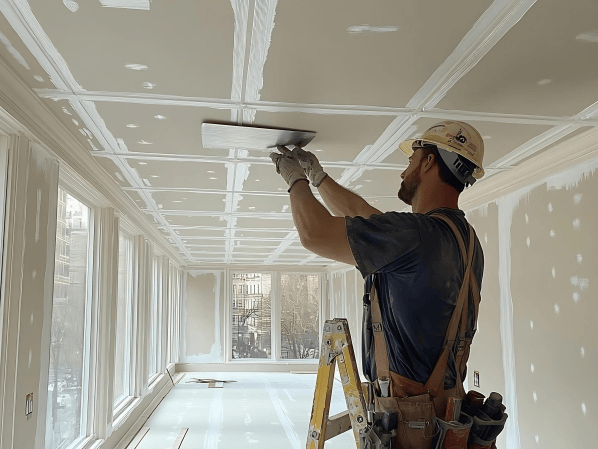
Jointing compounds are an important part of drywall and plasterboard installation. After boards are fixed in place, the joints between them need to be treated to create a continuous surface. Joint compounds fill these gaps, secure joint tape, and cover screw or nail heads before the final finishing stage.
Different formulations are developed for different stages of this process. Base coat compounds provide the material needed for embedding tape and building up joints, while topping compounds are designed to create a smoother final surface that is easier to sand.
For contractors handling large drywall projects, selecting compatible products for each stage can improve finishing consistency and reduce unnecessary rework. LONZONE provides dedicated Base Coat and Topping Compound solutions for professional drywall finishing applications.
Cement-Based Plaster Compounds
Cement-based plaster compounds are commonly used on concrete, masonry, and other suitable mineral substrates. Their formulations typically combine cement, graded aggregates, and functional additives to provide the strength and adhesion required for wall coating applications.
These materials are often selected for exterior walls, masonry surfaces, and environments where greater resistance to moisture is needed. Their performance depends on the formulation, substrate preparation, application thickness, and curing conditions.
For projects involving different building structures, buyers should check whether the selected cement-based product is specifically designed for the intended substrate and exposure conditions.
Polymer-Modified Plaster Compounds
Polymer-modified plaster compounds contain polymers that improve selected properties of traditional mineral-based formulations. Depending on the product design, these additives can enhance adhesion, flexibility, water retention, and workability.
This makes polymer-modified products useful for applications where conventional plaster materials may not provide the required performance. They can also help manufacturers develop more specialized products for different construction markets and customer requirements.
For distributors and private-label brands, customized formulations offer an opportunity to address specific regional needs rather than relying on a single general-purpose product.

How to Choose the Right Plaster Compound for Your Project
Selecting plaster compounds is not simply a matter of comparing prices. A product that performs well in one application may not deliver the same results on another surface. Before making a purchasing decision, it is important to consider how the material will be used and what performance the project requires.
The first consideration is the substrate. Plasterboard, concrete, masonry, and ALC wall panels have different surface characteristics, so material compatibility should always be checked. A compound formulated for drywall joint treatment, for example, should not automatically be considered suitable for general wall plastering.
Workability is another important factor, particularly for contractors managing large construction sites. Materials that spread and level easily can help improve application efficiency and reduce labor demands. At the same time, setting and drying characteristics need to match the construction schedule and local working conditions.
Adhesion and finishing quality also deserve attention. Poor bonding can lead to cracking, peeling, or other surface defects, while inconsistent material performance can make it difficult to achieve a uniform finish across large areas.
For distributors and wholesalers, however, the decision extends beyond the product itself. Consistent quality between production batches, reliable delivery schedules, suitable packaging, and the manufacturer's ability to maintain long-term supply are all important considerations. These factors have a direct influence on customer satisfaction and the stability of the supply chain.
Why the Manufacturer Matters
Even a well-designed plaster compound can deliver inconsistent results if its manufacturing process is not properly controlled. Variations in raw materials, particle size, additive distribution, and production conditions may affect workability, setting behavior, and final surface quality.
For this reason, choosing a manufacturer with established formulation and quality control capabilities is an important part of the purchasing process.
LONZONE specializes in the research, development, and manufacturing of construction materials, including gypsum products, ready-mixed mortars, wall finishing materials, and jointing compounds. Its product development focuses on meeting different construction requirements while supporting consistent production quality.
For distributors, building material suppliers, and brands looking to expand their product portfolios, working directly with a manufacturer can also provide greater flexibility in product specifications, packaging, and formulation development. Businesses interested in private-label production can learn more about LONZONE's manufacturing and OEM services.
Frequently Asked Questions
What is the difference between plaster and joint compound?
Plaster is generally used to coat and finish wall or ceiling surfaces, while joint compound is specifically formulated for treating drywall seams, embedding joint tape, and covering fasteners. Although both materials contribute to smooth wall finishes, they are designed for different applications.
Can gypsum plaster compounds be used outdoors?
Standard gypsum-based plaster compounds are generally intended for interior use because prolonged moisture exposure can affect their performance. For exterior walls, cement-based or specially formulated weather-resistant products are usually more appropriate.
Are plaster compounds available as dry powder and ready-mixed products?
Yes. Some products are supplied as dry powders that require mixing with water, while others come ready-mixed for direct application. The choice depends on the application, storage conditions, transportation requirements, and construction workflow.
What should buyers look for when sourcing plaster compounds?
Buyers should consider substrate compatibility, workability, adhesion, setting and drying characteristics, and finishing quality. For commercial procurement, manufacturing consistency, production capacity, packaging options, and reliable supply are equally important.
Finding the Right Plaster Compound for Your Market
Plaster compounds cover a broad range of construction materials, each developed to meet different surface preparation, coating, and finishing requirements. Understanding their differences helps contractors select suitable products and allows distributors to build a product range that better serves their customers.
For businesses sourcing wall finishing materials, the right manufacturing partner can make a significant difference in product consistency, supply reliability, and long-term business development.
Whether you need standard gypsum-based materials, drywall joint compounds, or customized construction material formulations, LONZONE can support your sourcing requirements. Contact LONZONE to discuss your product specifications, OEM opportunities, and bulk purchasing needs.


