





Office Compound: What Matters for a Smooth, Professional Finish
Release time: November 18 2026
Views: 34
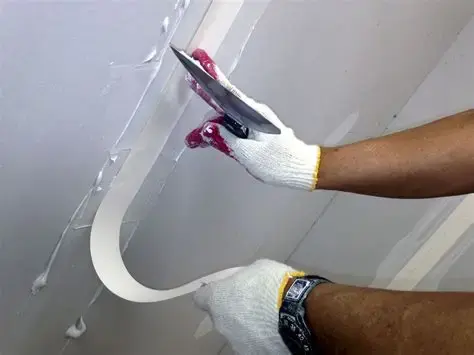
Walk into a well-finished office, and the first things you notice are usually the layout, lighting, furniture, and overall atmosphere. What often goes unnoticed is the quality of the wall and ceiling finishing behind that clean appearance.
In modern commercial construction, drywall systems are widely used to create office partitions, meeting rooms, corridors, and suspended ceilings. They offer flexibility in interior design and can speed up installation compared with traditional masonry. However, the final result depends heavily on how well the joints between boards are finished.
This is where office compound comes in. For contractors, building material distributors, and construction procurement teams, choosing the right joint compound is not simply about filling gaps. It is about achieving a consistent surface, keeping finishing work efficient, and making sure the materials perform reliably across large commercial projects.
Why Does Joint Compound Matter in Office Construction?
Office buildings often involve extensive areas of plasterboard walls and ceilings. A single project may include dozens of individual rooms, long corridors, open-plan workspaces, and meeting areas, all requiring a consistent finish.
Once gypsum boards are installed, the joints between panels, screw heads, and internal corners need to be treated before painting or decoration. If these areas are not finished properly, joints may remain visible through the paint, and surface imperfections can become particularly noticeable under office lighting.
A suitable joint compound helps create a continuous surface across individual boards. It also plays an important role in securing joint tape, building up the joint area, and preparing the surface for the final finishing stage.
For large commercial projects, the difference often comes down to practical details: how smoothly the compound spreads, how well it bonds to joint tape, and how easily it can be sanded.
Looking for joint compound for commercial wall and ceiling projects?
LONZONE develops and manufactures gypsum-based jointing compounds for professional plasterboard finishing. Our Base Coat is designed for the first and second coats of a three-coat jointing system, providing tape adhesion and joint strength. For the final finishing stage, our Topping Compound offers smooth spreadability and easy sanding.
Whether you are sourcing materials for construction projects or developing your own building material brand, LONZONE can support product supply, formulation development, and OEM manufacturing. Contact our team to discuss your requirements.
Where Is Office Compound Used?
Although offices differ in size and layout, most commercial interiors share similar drywall finishing requirements.
Partition walls are one of the most common applications. Gypsum boards are installed on metal framing to create private offices, meeting rooms, and workspaces. Once the boards are fixed in place, joint compound is used to cover the seams and fasteners, creating a smooth surface ready for decoration.
Ceilings require similar attention. Suspended drywall ceilings are often used to accommodate lighting, ventilation, electrical systems, and other building services. Because light can highlight even small surface irregularities, careful joint treatment is essential to achieving a uniform appearance.
Reception areas and executive offices may require an even higher standard of finishing. These spaces often feature large, uninterrupted wall surfaces and carefully designed lighting. Any uneven joints or poorly finished areas can affect the overall appearance of the interior.
In all these applications, the goal is the same: to make individual plasterboard panels look like one continuous surface.
What Makes a Good Office Compound?
Not all joint compounds perform in the same way. The right choice depends on the application, the finishing stage, and the working conditions on site.
One of the first things to consider is adhesion. During the taping stage, the compound needs to hold the joint tape securely against the plasterboard. Weak bonding can lead to tape separation and defects that may require additional repair work.
Workability is equally important. On a large office project, installers may need to finish hundreds or even thousands of meters of drywall joints. A compound that spreads smoothly and is easy to handle can make daily application more efficient. It should also be suitable for the application methods used by the contractor, whether manual or mechanical.
Sanding performance becomes particularly important during the final finishing stage. Once the compound has dried or set, the surface needs to be prepared for primer and paint. A product that sands easily helps workers achieve a more even finish without spending excessive time correcting imperfections.
Consistency also matters from a procurement perspective. When materials are used across multiple floors or construction sites, predictable product performance helps contractors maintain the same finishing standards throughout the project.
Base Coat and Topping Compound: Understanding Their Different Roles
A common mistake in drywall finishing is assuming that one compound should handle every stage of the process. In practice, different coats have different requirements.
The first stage focuses on embedding joint tape and creating a solid foundation. This is where a setting-type base coat is commonly used. It needs sufficient adhesion and strength to hold the tape in place and build up the joint.
The second coat further covers the joint area and helps blend it into the surrounding board surface.
The final coat has a different purpose. Rather than focusing primarily on tape bonding, it is intended to create a smooth, even surface that can be sanded and painted.
This is why base coat and topping compound are generally formulated differently.
LONZONE's Base Coat is a setting-type jointing compound designed for the first and second coats in a three-coat plasterboard jointing system. It is supplied in powder form and mixed with water before application.
Our Topping Compound is developed for the final coat. Its lightweight formulation is designed to spread easily, provide good coverage, and simplify sanding. It can be used on plasterboard and fibre cement joints, angles, and fastener heads in both residential and commercial walls and ceilings.
Using products designed for their respective stages helps contractors build a more consistent finishing process.
What Should Buyers Consider When Sourcing Joint Compound?
For distributors, importers, and building material brands, product performance is only part of the purchasing decision. A reliable supply arrangement is just as important.
Before choosing a manufacturer, buyers should look beyond the product sample and consider whether the supplier can maintain consistent quality during repeat production. Raw material control, production management, and finished-product testing all contribute to the reliability of the final product.
Customization may also be important, particularly for companies selling under their own brands. Different markets may have different expectations regarding product consistency, packaging formats, application methods, and performance specifications.
An experienced manufacturing partner should be able to discuss these requirements and determine whether an existing formulation can meet them or whether further development is needed.
For buyers planning long-term cooperation, it is also worth considering the manufacturer's R&D capabilities and production capacity. A supplier that can support both product development and commercial-scale manufacturing offers greater flexibility as market demand grows.
How LONZONE Supports Joint Compound Buyers
Finding the right product is only the beginning. For businesses sourcing construction materials internationally, having a manufacturer that understands both formulation requirements and commercial production can make the purchasing process much easier.
LONZONE specializes in the research and manufacturing of building materials, including jointing compounds, gypsum-based mortars, tile adhesives, repair mortars, and ALC panels.
For joint compound customers, our cooperation options include private-label manufacturing, formula processing, and joint product development.
If you already have an established formulation, we can manufacture according to agreed specifications while maintaining confidentiality. If you are developing a new product for a particular market, our R&D team can assist with formulation development, raw material selection, laboratory testing, and production scale-up.
Our manufacturing process covers the entire project, from initial requirements and sample testing to trial production and mass manufacturing.
You can learn more about our manufacturing and partnership capabilities or contact LONZONE to discuss your sourcing and OEM requirements.
Frequently Asked Questions
What is office compound used for?
Office compound is generally used to finish plasterboard joints, corners, and fastener heads in commercial interiors. It helps create a smooth surface before priming and painting.
Can regular drywall joint compound be used for office walls?
Yes. Joint compounds designed for plasterboard finishing are commonly used in office partitions and ceilings. The important thing is to select a product suitable for the specific finishing stage and substrate.
What is the difference between base coat and topping compound?
Base coat is primarily used to embed joint tape and build up drywall joints. Topping compound is applied during the final stage to create a smooth surface that is easier to sand and prepare for decoration.
Can joint compound manufacturers provide OEM services?
Yes. Some manufacturers offer private-label production, customized formulations, and contract manufacturing. Buyers should discuss their target market, technical specifications, packaging requirements, and expected order volumes before starting cooperation.
Choosing the Right Materials for Better Office Finishing
A professional office interior is the result of many details coming together, and drywall finishing is one of the most important. The right joint compound helps contractors achieve smooth walls and ceilings while keeping application and surface preparation manageable.
For distributors, importers, and construction material brands, choosing a manufacturer with reliable production and R&D capabilities is equally important.
With experience in building material development and manufacturing, LONZONE provides jointing compound solutions for different market requirements. If you are looking for a long-term manufacturing partner or planning to expand your joint compound product range, we welcome you to discuss your project with our team.


