





Lightweight Joint Compound: Uses, Benefits, and How to Choose the Right Type
Release time: November 05 2026
Views: 70
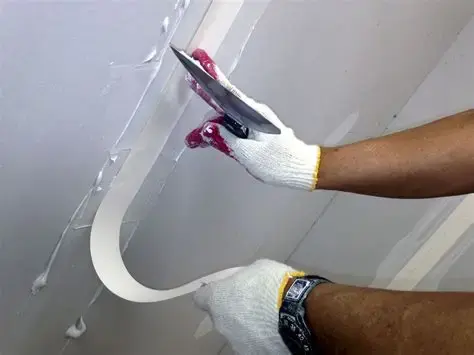
Choosing the right joint compound is an important part of achieving a smooth, durable drywall finish. While traditional joint compounds are widely used for filling joints and covering fasteners, lightweight formulations have become increasingly popular among contractors because they are easier to handle, spread, and sand. These advantages can make a difference, particularly on projects involving large wall and ceiling areas.
However, lightweight joint compound is not necessarily the right choice for every finishing task. Its suitability depends on the formulation, the condition of the drywall surface, and the stage of the finishing process. Understanding how it works, where it performs best, and how it compares with other materials can help contractors make more informed decisions.
What Is Lightweight Joint Compound?
Lightweight joint compound is a drywall finishing material formulated with a lower density than conventional joint compounds. Despite its reduced weight, it is designed to provide the workability needed for filling drywall joints, covering fasteners, and creating smooth surface transitions.
An ultra lightweight joint compound takes this approach further by emphasizing reduced density and easier handling. Depending on the formulation, it may offer smoother spreading, less application resistance, and easier sanding. This can help reduce physical effort during repetitive finishing work and improve productivity on larger projects.
However, a lower-density formulation does not automatically mean better performance in every application. Adhesion, consistency, shrinkage, and surface finish remain important factors when evaluating a joint compound.
As a building materials manufacturer specializing in mortar, gypsum products, and ALC wall panels, Lonzone develops jointing compound solutions for different wall finishing requirements. Its topping joint compound range is designed for the finishing stage of drywall joint treatment, helping create a smooth and uniform surface. For contractors and distributors looking for finishing materials, choosing a product based on its intended application is essential to achieving consistent results.
What Is Lightweight Joint Compound Used For?
Because of its workability and relatively easy sanding characteristics, lightweight joint compound is commonly used in several drywall finishing applications. Its main purpose is to create an even surface while making finishing work easier for installers.
One common application is finishing drywall joints. After the joints have been properly taped and filled, lightweight compound can be used for subsequent coats to smooth the transitions between drywall panels. It is also suitable for covering screw heads and other minor surface imperfections before painting.
Another practical application is drywall repair. Small dents, shallow cracks, nail holes, and minor damaged areas can often be repaired with lightweight compound. Its spreadability makes it easier to apply and feather into the surrounding surface, helping minimize visible repair marks after sanding.
Lightweight formulations may also be used for selected skim-coating applications, particularly when the goal is to smooth minor surface irregularities rather than correct significant substrate defects.
Although these applications overlap, the requirements are not identical. A compound that works well for surface finishing may not provide the adhesion or filling performance needed for every repair or taping task. This is why it is useful to understand how lightweight compound differs from other commonly used wall repair materials.
Lightweight Joint Compound vs. Spackle vs. All-Purpose Joint Compound
Lightweight joint compound, spackle, and all-purpose joint compound are sometimes used interchangeably in everyday conversations. However, they have different formulations and are generally intended for different types of work.
| Material | Main characteristics | Typical applications |
| Lightweight joint compound | Lower density, easy spreading, generally easier sanding | Drywall finishing, minor repairs, selected skim coating |
| Spackle | Designed for localized filling and small surface repairs | Nail holes, small dents, minor wall damage |
| All-purpose joint compound | Versatile formulation for multiple drywall finishing stages | Embedding tape, filling joints, and finishing |
The main difference comes down to application range and performance requirements.
Spackle is generally the more practical option for small, isolated repairs, such as filling nail holes or minor dents. It is not typically intended to replace joint compound in a complete drywall joint finishing system.
All-purpose joint compound offers greater versatility. It is commonly used for embedding tape, filling joints, and applying finishing coats, making it a convenient choice when contractors want one product for several stages of drywall work.
Lightweight joint compound, by comparison, focuses more on ease of handling and finishing efficiency. It can be particularly useful for finishing coats and surface repairs where smooth application and easier sanding are priorities.
Therefore, the best choice is not necessarily the lightest or most versatile material. It is the one that matches the requirements of the specific finishing stage.
Can You Use Lightweight Joint Compound for Taping?
One question contractors often ask is whether lightweight joint compound can be used to embed drywall tape. The answer is yes, but only when the product is specifically formulated and approved for that purpose.
Taping requires a compound with sufficient adhesion to hold the tape securely against the drywall surface. It must also have suitable consistency to allow installers to embed the tape evenly and remove excess material without leaving air pockets or uneven areas.
Some lightweight compounds are designed for finishing coats rather than tape embedding. Using these products for the initial taping stage may lead to unsatisfactory results if their bonding properties are not suitable.
For this reason, contractors should always check the manufacturer's technical specifications before using a lightweight compound for taping. In many drywall finishing systems, a dedicated taping or all-purpose compound is used for the first coat, followed by a lightweight finishing compound for subsequent coats.
This approach allows each material to perform the job it is designed for, rather than relying on one formulation to meet every requirement.
Is Lightweight Joint Compound the Best Choice for Skim Coating?
Beyond joint finishing, lightweight joint compound may also be considered for skim coating. However, whether it is the best joint compound for skim coating depends on the condition of the substrate and the level of surface correction required.
For relatively smooth drywall surfaces with minor imperfections, a lightweight formulation can be a convenient option. Its spreading characteristics may help contractors apply a thin, even layer while reducing the effort required to smooth and sand the surface.
However, skim coating requires consistent coverage and good adhesion across a relatively large area. The compound should be easy to spread without excessive drag and should maintain a uniform finish as it dries.
For surfaces with deep depressions, extensive damage, or significant unevenness, a lightweight finishing compound may not be sufficient on its own. Proper surface preparation and a suitable base-coat material may be necessary before applying the final finishing layer.
In other words, lightweight joint compound can work well for selected skim-coating tasks, but the product should be chosen according to the actual condition of the wall rather than its weight alone.
Using Lightweight Joint Compound for Drywall Repair
While skim coating focuses on improving a broader surface, drywall repair usually involves correcting specific damaged areas. Lightweight joint compound can be a practical option for minor repairs because it is relatively easy to apply, shape, and sand.
For small dents, shallow scratches, and screw holes, start by removing loose material and cleaning away dust. Apply the compound evenly, feathering the edges into the surrounding surface to avoid creating noticeable ridges.
When repairing deeper damage, applying a single thick layer is generally less effective than building up the repair in multiple applications. Allow each layer to dry according to the manufacturer's instructions before applying the next one. This helps achieve a more uniform finish and reduces the risk of problems associated with excessive material buildup.
Once the compound is completely dry, lightly sand the repaired area and prepare it for primer and paint.
The same principle applies to larger drywall finishing projects: proper material selection and application methods work together to determine the final surface quality. For additional information about joint compound applications and finishing considerations, see our guide to drywall joint compound and its applications.
How to Choose the Right Lightweight Joint Compound
After understanding the differences between lightweight compound, spackle, and all-purpose joint compound, the next step is evaluating which product best fits the project.
Rather than choosing based on weight alone, contractors and project managers should consider several practical factors:
Intended application: Confirm whether the compound is designed for tape embedding, joint finishing, drywall repair, or skim coating.
Workability: Evaluate how smoothly the material spreads and whether it is easy to feather along joints and repair areas.
Adhesion: Check whether the compound is suitable for the intended substrate and finishing system.
Drying and shrinkage: Consider the drying characteristics and whether multiple coats are needed to achieve the desired finish.
Project requirements: For large commercial projects, consistent product performance and application efficiency are particularly important.
These considerations are especially relevant when selecting materials for multi-stage drywall finishing. A product that performs well as a finishing coat may not be suitable for embedding tape or filling deep joints. Matching the compound to each stage can help reduce rework and maintain a consistent surface appearance.
Final Thoughts
Lightweight joint compound offers practical advantages for drywall finishing, especially when easier handling, smooth spreading, and reduced sanding effort are priorities. It can be suitable for finishing drywall joints, minor repairs, and selected skim-coating applications, while its use for taping depends on the specific product formulation.
The key is to understand that lightweight, all-purpose, and specialized repair compounds serve different purposes. Selecting the right material for each stage of drywall finishing is more important than choosing a product based on a single characteristic.
As a building materials manufacturer, Lonzone provides jointing compound solutions for different wall finishing requirements. Whether you are sourcing finishing materials for residential developments, commercial construction, or distribution, our team can help you explore suitable product options. Contact Lonzone to discuss your project requirements and find a suitable jointing compound solution.


