





Flexible Base Coat for Ceiling Panels: How to Choose the Right Jointing Material
Release time: November 02 2026
Views: 69
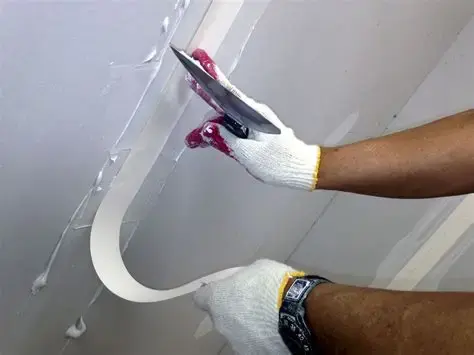
Ceiling panels may look stable once they are installed, but the joints between panels can be affected by changes in temperature and humidity, minor structural movement, and repeated stress during the life of the building. If the jointing material cannot accommodate these conditions, cracks and other surface defects may eventually appear.
That is why choosing the right flexible base coat for ceiling panels matters. A good base coat should do more than fill a joint. It should bond securely to the panel, work well with joint tape, provide a stable foundation for subsequent finishing coats, and retain enough flexibility to accommodate normal movement.
For contractors, distributors, and construction-material buyers, these characteristics are important not only for the finished appearance but also for installation efficiency and long-term maintenance.
Why Does Flexibility Matter in Ceiling Panel Joints?
Ceiling panels form part of a larger building system. Even when the panels have been properly installed, small movements can occur as the structure responds to temperature, humidity, and changes in the surrounding environment.
The joints are often where these movements become most noticeable. A jointing material that is too rigid may be more vulnerable to cracking when the panels move slightly relative to each other.
A flexible base coat can help the joint accommodate this minor movement while maintaining a strong bond with the panel and joint tape. The goal is not simply to choose the most flexible material available. What matters is achieving the right balance between flexibility, adhesion, strength, and workability.
What Should You Look for in a Flexible Base Coat?
When selecting a base coat for ceiling panel joints, several factors deserve attention.
Strong Adhesion to the Substrate
A reliable joint starts with good adhesion. The base coat needs to bond properly to the panel surface and hold the joint tape securely in place.
Weak adhesion can lead to hollow spots, separation, or visible joint defects after finishing. On larger projects, consistent adhesion across different batches is equally important because even small variations can become noticeable when large areas are finished under the same specifications.
The Right Level of Flexibility
Flexibility helps the jointing layer cope with minor movement in the ceiling system. This can be particularly valuable in environments where temperature or humidity changes throughout the year.
At the same time, a base coat still needs enough strength to form a stable joint. Excessive flexibility on its own does not guarantee better performance. A well-formulated product should balance movement accommodation with adhesion and joint strength.
Easy Application Overhead
Ceiling work presents a practical challenge: most of the material is applied overhead. A compound that spreads smoothly, holds its consistency, and is easy to tool can make a noticeable difference to the installer.
Good workability also contributes to productivity. When the material is easy to mix and apply, contractors can maintain a more consistent application rate and spend less time correcting uneven areas.
LONZONE's Base Coat is a setting-type jointing compound designed for the first and second coats in a three-coat plasterboard jointing system. It is supplied as a powder that is mixed with water before application and can be applied either manually or by machine.
Consistent Finishing Performance
The base coat provides the foundation for the finishing stages, so its surface behavior matters. It should allow subsequent coats to be applied evenly without creating unnecessary ridges or irregularities.
Sanding performance is also worth considering where the system requires surface preparation between stages. A compound that can be sanded consistently helps contractors achieve a smoother transition to the finishing coat and reduces unnecessary rework.
Reliable Quality from Batch to Batch
For a small renovation, a minor difference in material behavior may be manageable. On a commercial project, it can become a much bigger issue.
Large ceiling projects may require hundreds or thousands of bags of jointing material. Differences in raw materials, manufacturing processes, moisture content, or packaging can affect how the compound mixes and performs on site.
When comparing suppliers, it is useful to look beyond the unit price. Product consistency, manufacturing control, technical support, and supply capacity all contribute to the actual cost of achieving a reliable finished surface.
LONZONE also provides guidance on evaluating base coat quality and pricing, which can be useful when comparing products for different project requirements. Read the guide to base coat quality and pricing.
How Is Base Coat Used in a Ceiling Panel Jointing System?
A flexible base coat is normally one part of a complete jointing system rather than the final surface finish.
A typical application sequence includes:
Prepare the joints. Make sure the panel joints are clean and free from dust, loose material, or other contaminants.
Apply the base coat. Spread the compound over the joint area to create the bedding layer.
Embed the joint tape. Press the appropriate tape firmly into the fresh compound.
Apply the second coat. Build up and level the joint while maintaining a smooth transition to the surrounding panel surface.
Allow the material to set. Follow the manufacturer's recommended setting and drying requirements.
Apply the finishing coat. Use a suitable topping or finishing compound to achieve the required surface appearance.
Prepare for decoration. Sand or otherwise prepare the finished surface before primer and final decoration.
The exact procedure can vary depending on the panel type, joint design, environmental conditions, and finishing system. Following the recommendations of the panel and jointing-compound manufacturers is important, particularly on large or specification-driven projects.
Flexible Base Coat vs. General-Purpose Jointing Compound
Not every jointing compound is designed to perform the same role.
A base coat is primarily responsible for establishing the joint and securing the reinforcement tape. It therefore needs to provide dependable adhesion and sufficient strength while remaining workable during application.
A finishing or topping compound, on the other hand, is generally selected with surface smoothness and final appearance in mind.
Using products according to their intended role can make the overall jointing process more predictable. LONZONE's Base Coat is designed for the tape coat and second coat within a three-coat plasterboard jointing system and can be followed by a topping or all-purpose compound where a final smooth finish is required.
This system-based approach can be particularly useful for contractors handling larger projects, where consistent application and predictable material performance are more important than simply choosing one compound for every stage.
Choosing the Right Base Coat Supplier
The product itself is only part of the decision. The manufacturer's ability to provide consistent quality and technical support can also affect project performance.
Before selecting a base coat supplier, consider:
Compatibility with the ceiling panel or substrate
Recommended application methods
Mixing and setting characteristics
Joint tape compatibility
Availability of technical documentation
Production and supply capacity
Consistency between production batches
Ability to support project-specific requirements
LONZONE develops and manufactures building materials including mortar, plaster, jointing compounds, and ALC wall panels. Its building-material solutions are developed for professional construction applications, with a focus on consistent product performance and practical application requirements.
For buyers working on a specific ceiling panel project, discussing the substrate, application method, environmental conditions, and expected finish with the manufacturer can help avoid problems later in the installation process.
A Better Approach to Ceiling Panel Jointing
A good flexible base coat for ceiling panels should do more than provide flexibility. It needs to work as part of the entire jointing system, combining reliable adhesion, appropriate flexibility, joint strength, smooth application, and consistent quality.
Getting these details right at the base-coat stage can make the later finishing process easier and help reduce the risk of visible joint defects.
If you are sourcing a base coat for ceiling panels or looking for a jointing compound suited to a specific project, contact LONZONE to discuss your application requirements with the manufacturer.


