





Premium Joint Compound Factory: Production & Customization
Release time: October 23 2026
Views: 12
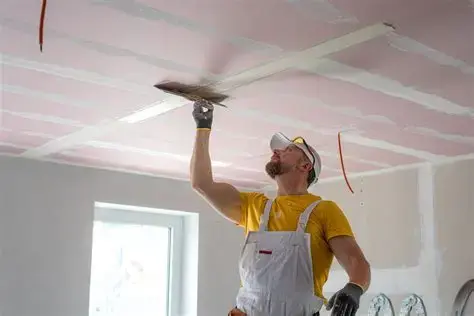
For drywall manufacturers, building material distributors, and private-label brands, the performance of a joint compound depends on more than its formulation. Consistent production, reliable quality control, scalable capacity, and the ability to adapt products to different markets all become important when moving from product development to commercial supply.
A capable premium joint compound factory therefore needs to manage the entire process, from raw material preparation and formulation to batch production, testing, packaging, and delivery.
From Formula Development to Stable Production
Joint compound production starts with a controlled formulation rather than simply mixing raw materials in large quantities. Different applications may require different balances of workability, adhesion, drying behavior, sandability, joint strength, and surface finish.
For an interior joint compound factory, the challenge is to reproduce these characteristics consistently at production scale. A formula that performs well in laboratory testing must remain stable when transferred to larger batches.
This makes the transition from laboratory development to trial production particularly important. A structured manufacturing process allows the factory to identify potential differences in mixing, raw material behavior, and product performance before full-scale production.
At LONZONE, the manufacturing workflow covers needs discussion, formula development or matching, sample testing, packaging confirmation, trial production, mass production, and logistics. This provides a controlled path from product concept to commercial manufacturing.
Production Capacity Matters Beyond Volume
For a premium joint compound manufacturer, production capacity is not simply a question of how many tons can be produced. Capacity also needs to support stable batch scheduling, repeat orders, product variations, and consistent quality as demand increases.
A manufacturing facility serving international building material brands may need to handle different joint compound specifications, packaging formats, and private-label requirements without compromising production consistency.
LONZONE operates a large-scale manufacturing facility and reports annual production capacity of 400,000 tons across its building material manufacturing operations. Its product portfolio includes jointing compounds, self-leveling mortars, tile adhesives, repair mortars, waterproofing mortars, wall putties, and thermal insulation mortars.
This broader manufacturing environment can also support customers that need joint compound alongside complementary building materials.
Quality Control Should Follow the Production Process
Quality control is most effective when it is integrated into production rather than performed only on finished products.
For joint compounds, production control can involve raw material consistency, formulation accuracy, mixing performance, batch uniformity, and finished-product testing. The objective is to make sure that material produced at different times maintains comparable application characteristics.
For pre-mixed products in particular, commercial-scale manufacturing needs to maintain consistent material properties throughout production and packaging. Small variations in formulation or processing can affect spreadability, drying behavior, adhesion, finishing quality, or sanding performance.
A strong pre mixed joint compound manufacturer therefore needs laboratory capabilities that connect product development with production validation.
Customization from Formula to Packaging
Commercial joint compound projects often require more than an existing standard product. A brand may already have a proven formulation, require adjustments for a particular market, or need a product developed around a target performance profile.
This is where manufacturing flexibility becomes important.
A residential joint compound manufacturer supporting different markets may need to adapt product characteristics, packaging, labeling, or production specifications while maintaining controlled manufacturing conditions.
LONZONE provides several manufacturing models. Customers can supply their own brand and packaging specifications for private-label production, provide an existing formula for controlled processing, or work with the R&D team on joint formula development and manufacturing.
This approach allows customization to be connected directly with trial production and mass manufacturing instead of treating product development and production as separate processes.
Scaling from Trial Batches to Commercial Supply
Trial production is an important bridge between laboratory validation and full-scale manufacturing. It provides an opportunity to confirm that the formula, production process, and quality requirements can work together under commercial conditions.
Once the trial batch meets the required specifications, production can move toward larger-scale manufacturing. This reduces the risk of discovering process-related issues only after a product has entered regular commercial supply.
For private-label and OEM projects, the same principle applies to packaging. Packaging specifications should be confirmed before mass production so that product, labeling, and logistics requirements remain aligned.
LONZONE describes its manufacturing process as a seven-step workflow covering requirements, formula development or matching, sample testing, packaging confirmation, trial production, mass production, and delivery.
Building a More Flexible Joint Compound Manufacturing Program
A modern joint compound factory should be capable of supporting more than one product specification. Different customers may require different formulations, product formats, application characteristics, packaging designs, and market requirements.
LONZONE's jointing compound portfolio includes topping and base coat products. Its topping is positioned as a lightweight formulation designed for coverage, spreadability, and sanding, while its base coat is a setting-type jointing compound intended for tape adhesion and joint strength within a three-coat jointing system.
For brands developing or expanding their drywall finishing range, this type of manufacturing capability can provide a foundation for both standard products and customized programs.
Explore Joint Compound Manufacturing Capabilities
If you are developing a private-label joint compound, expanding an existing drywall finishing range, or planning commercial production for a new market, manufacturing capability should be considered from the perspective of capacity, process control, QC, formulation flexibility, and scale-up.
You can learn more about LONZONE's manufacturing capabilities to see how its R&D, trial production, mass manufacturing, and OEM collaboration processes are structured.
For product specifications and available jointing compound solutions, explore the LONZONE Jointing Compounds range.
If you are evaluating applications and completed building material projects, the LONZONE Global Projects page provides examples of project applications across different building environments.
Looking for a manufacturing partner for your next joint compound project? Contact LONZONE to discuss your formulation, production, packaging, and OEM requirements.


