





Sanding Joint Compound Problems: Causes & Solutions
Release time: October 15 2026
Views: 2
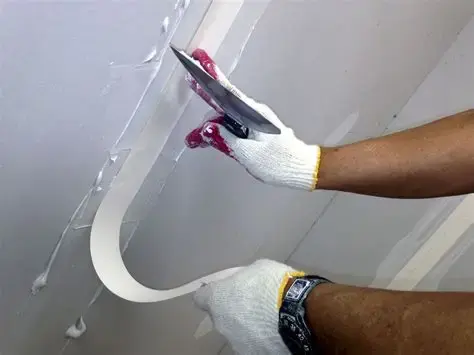
A smooth drywall finish is not determined by sanding alone. When sanding joint compound becomes difficult, leaves scratches, exposes the substrate, or fails to remove visible defects, the underlying problem often started earlier in the finishing process. Poor drying, excessive buildup, weak adhesion, inconsistent material performance, and incorrect sanding pressure can all lead to rework.
For drywall contractors and building-material professionals, understanding these failure points is more useful than simply knowing how to sand joint compound. The goal is to identify the cause of the defect, correct it efficiently, and prevent the same problem from appearing across the next project.
Joint Compound Is Difficult to Sand
One of the most common complaints is that the compound becomes extremely hard after drying. This can make sanding labor-intensive and may increase surface damage when excessive pressure is used.
The problem can come from several factors, including product formulation, excessive thickness, insufficient drying time between coats, or selecting a compound that is not intended for easy finishing.
An easy sand joint compound should produce a manageable sanding response without requiring aggressive pressure. For large drywall projects, good sanding performance can directly affect labor productivity and the amount of dust and rework generated.
Before changing sanding tools, check whether the compound itself is appropriate for the required finish level and whether the material has fully dried.
Sanding Creates Scratches or Gouges
If sanding joint compound leaves deep scratches, the problem may not be the sandpaper alone. Excessive pressure, an unsuitable abrasive, or uneven material hardness can produce visible marks that remain after priming and painting.
Another common mistake is trying to remove a major ridge entirely by sanding. When a high spot is substantial, aggressive sanding can expose the drywall paper before the surrounding compound becomes flat.
A better troubleshooting approach is to distinguish between a surface defect and a shape defect. Minor ridges can usually be refined through sanding, while larger uneven areas may require a thin corrective coat rather than continued abrasion.
The Drywall Paper Becomes Exposed
Exposed paper is a clear sign of over-sanding. It commonly occurs around joint edges, corners, screw heads, or areas where the compound layer is too thin.
Once the paper has been damaged, simply continuing to sand will not solve the problem. The affected area should be evaluated and repaired before the final finish is applied.
This is particularly important when working under strong side lighting or with darker, higher-sheen paints. Small surface differences that appear insignificant during sanding can become highly visible after decoration.
Joint Compound Remains Soft or Takes Too Long to Dry
A fast drying joint compound can be attractive when project schedules are tight, but faster drying does not mean every thick application will dry uniformly.
Ready-mixed compounds primarily rely on moisture evaporation, so thick areas, poor ventilation, low temperature, or high humidity can extend drying time. Applying another coat or sanding before the material has properly dried can create tearing, clogging, uneven edges, and additional rework.
When troubleshooting slow drying, check the environmental conditions and coating thickness before assuming the material itself has failed. Product technical data should also be used to determine appropriate drying and sanding conditions.
Cracks or Joint Lines Reappear After Finishing
If a joint looks smooth immediately after sanding but develops cracks or visible lines later, sanding was probably not the root cause.
Possible causes include insufficient joint strength, movement between boards, poor tape adhesion, excessive compound shrinkage, or unsuitable material selection.
A drywall joint compound needs to work as part of the overall jointing system rather than simply acting as a surface filler. LONZONE, for example, offers Base Coat for the earlier jointing stages, with an emphasis on tape adhesion and joint strength, while its Topping compound is designed for the final finishing stage and easy sanding.
Repeated Sanding Is Increasing Labor Costs
When contractors repeatedly sand, inspect, patch, and sand again, the problem is often a combination of material and workmanship rather than sanding technique alone.
A useful troubleshooting checklist includes:
Is the compound too hard or inconsistent after drying?
Are thick areas shrinking or drying unevenly?
Are high spots being corrected by excessive sanding?
Is the compound compatible with the required finish?
Does the product provide consistent workability between batches?
Are defects being identified before primer and paint?
Reducing rework starts with material consistency. LONZONE's manufacturing capabilities include jointing compounds as part of its product range, with formula development, sample testing, trial production, and mass production under quality control. This can be particularly relevant for distributors, contractors, and building-material brands that need consistent product performance across larger projects.
Choosing a Joint Compound That Reduces Rework
Different finishing stages require different performance characteristics. A drywall finishing system may need strong adhesion in the base layer while requiring smooth spreadability and easy sanding in the final layer.
LONZONE's Jointing Compounds range includes Base Coat and Topping products for drywall finishing systems. Its Topping compound is formulated for smooth spreading and easy sanding, with the manufacturer highlighting fine, uniform sanding dust and reduced rework.
For brands or distributors developing their own drywall finishing products, LONZONE also provides private-label manufacturing, formula processing, and joint R&D and manufacturing services.
Final Takeaway
Problems with sanding joint compound are often symptoms of earlier finishing defects. Excessive buildup, incomplete drying, poor adhesion, inconsistent material performance, and over-sanding can all turn a straightforward finishing job into costly rework.
Instead of asking only how to sand joint compound, contractors should first ask why the surface is difficult to sand or why the defect keeps returning. Choosing a joint compound with appropriate bonding, workability, drying, and sanding characteristics can make the finishing process more predictable and reduce labor-intensive corrections.
Looking for a complete drywall finishing system? Explore LONZONE's drywall finishing solution for Base Coat and Topping, and discuss your project requirements with the team.


